Skipjack TunaorAtlantic Bonito
Two fish anglers mix up. Here is what separates them, and what each one’s rules are in your state.
How to tell them apart
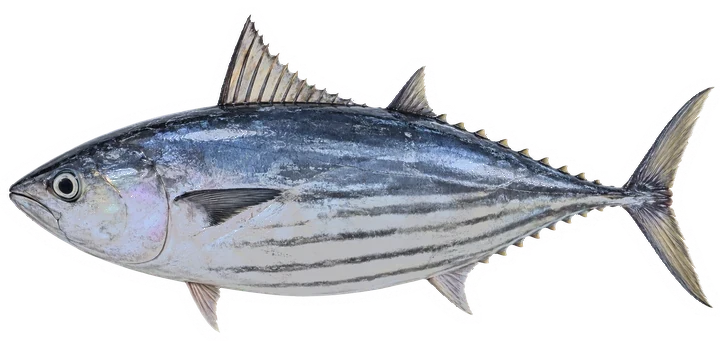
Skipjack Tuna
Dark horizontal stripes on the BELLY — not the back; stout purple-backed football.
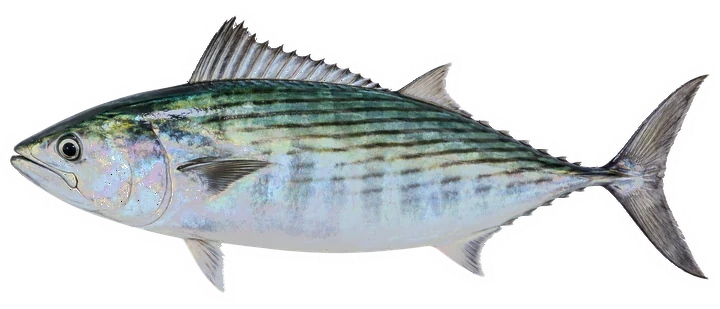
Atlantic Bonito
Straight dark stripes along the upper flank, visible teeth, slimmer than false albacore.
Atlantic bonito, next to skipjack tuna: stripes on the back, slimmer.
Side by side
| Skipjack Tuna | Atlantic Bonito | |
|---|---|---|
| Scientific name | Katsuwonus pelamis | Sarda sarda |
| Also called | Skippy, Oceanic bonito | Bonito |
| Waters | Offshore | Nearshore |
| Heaviest state record | 33.5 lb · Florida (1998) | 27 lb · Texas (1969) |
| On the table | Strong and dark — bleed it, grill it fresh, or smoke it. | Good — far better table fare than false albacore. |
| Rules of its own in | 19 states | 1 states |
Rules for
Every state, both fish
The two fish are regulated differently in 19 of 19 states with a rule for either. In Massachusetts, skipjack tuna is No size limit, No bag limit and Atlantic bonito is 16" min (curved fork length), 5 fish combined with false albacore. Call the fish wrong and you keep a short one or throw back a legal one.
| State | Skipjack Tuna: size · bag · season | Atlantic Bonito: size · bag · season |
|---|---|---|
| Alabama | No size limitNo bag limitOpen year-roundOpenFederal rule (NOAA Highly Migratory Species)NOAA HMS 2025 · checked | Not specifically regulated; the state’s default for unlisted species applies. |
| Connecticut | No size limitNo bag limitOpen year-roundOpenFederal rule (NOAA Highly Migratory Species)NOAA HMS 2025 · checked | Not specifically regulated; the state’s default for unlisted species applies. |
| Delaware | No size limitNo bag limitOpen year-roundOpenFederal rule (NOAA Highly Migratory Species)NOAA HMS 2025 · checked | Not specifically regulated; the state’s default for unlisted species applies. |
| Florida (Atlantic) | No size limitNo bag limitOpen year-roundOpenFederal rule (NOAA Highly Migratory Species)NOAA HMS 2025 · checked | Not specifically regulated; the state’s default for unlisted species applies. |
| Florida (Gulf) | No size limitNo bag limitOpen year-roundOpenFederal rule (NOAA Highly Migratory Species)NOAA HMS 2025 · checked | Not specifically regulated; the state’s default for unlisted species applies. |
| Georgia | No size limitNo bag limitOpen year-roundOpenFederal rule (NOAA Highly Migratory Species)NOAA HMS 2025 · checked | Not specifically regulated; the state’s default for unlisted species applies. |
| Louisiana | No size limitNo bag limitOpen year-roundOpenFederal rule (NOAA Highly Migratory Species)NOAA HMS 2025 · checked | Not specifically regulated; the state’s default for unlisted species applies. |
| Maine | No size limitNo bag limitOpen year-roundOpenFederal rule (NOAA Highly Migratory Species)NOAA HMS 2025 · checked | Not specifically regulated; the state’s default for unlisted species applies. |
| Maryland | No size limitNo bag limitOpen year-roundOpenFederal rule (NOAA Highly Migratory Species)NOAA HMS 2025 · checked | Not specifically regulated; the state’s default for unlisted species applies. |
| Massachusetts | No size limitNo bag limitOpen year-roundOpenFederal rule (NOAA Highly Migratory Species)NOAA HMS 2025 · checked | 16" min (curved fork length)5 fish combined with false albacoreOpen year-roundOpenMA DMF 2026 · checked |
| Mississippi | No size limitNo bag limitOpen year-roundOpenFederal rule (NOAA Highly Migratory Species)NOAA HMS 2025 · checked | Not specifically regulated; the state’s default for unlisted species applies. |
| New Hampshire | No size limitNo bag limitOpen year-roundOpenFederal rule (NOAA Highly Migratory Species)NOAA HMS 2025 · checked | Not specifically regulated; the state’s default for unlisted species applies. |
| New Jersey | No size limitNo bag limitOpen year-roundOpenFederal rule (NOAA Highly Migratory Species)NOAA HMS 2025 · checked | Not specifically regulated; the state’s default for unlisted species applies. |
| New York | No size limitNo bag limitOpen year-roundOpenFederal rule (NOAA Highly Migratory Species)NOAA HMS 2025 · checked | Not specifically regulated; the state’s default for unlisted species applies. |
| North Carolina | No size limitNo bag limitOpen year-roundOpenFederal rule (NOAA Highly Migratory Species)NOAA HMS 2025 · checked | Not specifically regulated; the state’s default for unlisted species applies. |
| Rhode Island | No size limitNo bag limitOpen year-roundOpenFederal rule (NOAA Highly Migratory Species)NOAA HMS 2025 · checked | Not specifically regulated; the state’s default for unlisted species applies. |
| South Carolina | No size limitNo bag limitOpen year-roundOpenFederal rule (NOAA Highly Migratory Species)NOAA HMS 2025 · checked | Not specifically regulated; the state’s default for unlisted species applies. |
| Texas | No size limitNo bag limitOpen year-roundOpenFederal rule (NOAA Highly Migratory Species)NOAA HMS 2025 · checked | Not specifically regulated; the state’s default for unlisted species applies. |
| Virginia | No size limitNo bag limitOpen year-roundOpenFederal rule (NOAA Highly Migratory Species)NOAA HMS 2025 · checked | Not specifically regulated; the state’s default for unlisted species applies. |
In the app
Point the camera at the fish and Chum names it before you take the picture, skipjack tuna or Atlantic bonito, with the right rules for the water you’re standing in. No signal needed.
Get the appQuestions anglers ask
How do you tell skipjack tuna from Atlantic bonito?
Skipjack Tuna: Dark horizontal stripes on the BELLY — not the back; stout purple-backed football. Atlantic Bonito: Straight dark stripes along the upper flank, visible teeth, slimmer than false albacore. Atlantic bonito, next to skipjack tuna: stripes on the back, slimmer.
Which gets bigger, skipjack tuna or Atlantic bonito?
Skipjack Tuna. The heaviest state record we hold is 33.5 lb in Florida; the heaviest Atlantic bonito record is 27 lb in Texas.
Which is better to eat, skipjack tuna or Atlantic bonito?
Skipjack Tuna: Strong and dark — bleed it, grill it fresh, or smoke it. Atlantic Bonito: Good — far better table fare than false albacore.
Do skipjack tuna and Atlantic bonito have the same limits?
Not everywhere. They differ in 19 state rulebooks. Massachusetts: skipjack tuna No size limit, No bag limit, Atlantic bonito 16" min (curved fork length), 5 fish combined with false albacore; Alabama: skipjack tuna No size limit, No bag limit, Atlantic bonito no rule of its own; Connecticut: skipjack tuna No size limit, No bag limit, Atlantic bonito no rule of its own; Delaware: skipjack tuna No size limit, No bag limit, Atlantic bonito no rule of its own; Florida (Atlantic): skipjack tuna No size limit, No bag limit, Atlantic bonito no rule of its own; and more in the table on this page.